

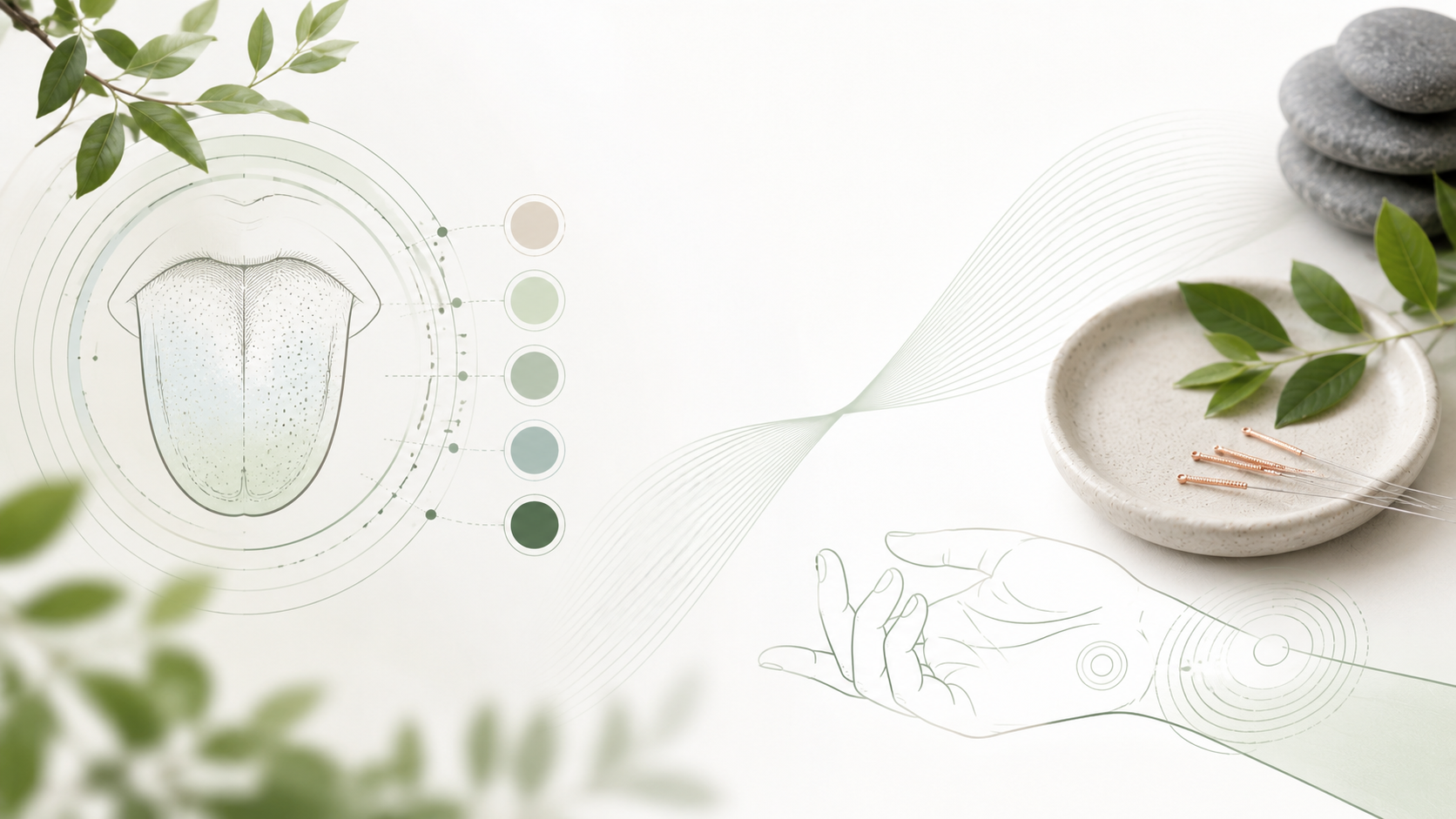
Traditional Chinese Medicine (TCM) takes a whole-body approach to understanding health. Instead of looking at a single symptom, a practitioner considers how different signs, patterns, and body systems connect. Two important assessment tools often used in acupuncture and TCM are tongue diagnosis and pulse diagnosis.
These methods help practitioners gather information about your body’s internal balance, energy, circulation, digestion, stress response, and overall wellness. While they may seem simple from the outside, both tongue and pulse assessment are detailed practices that generations of healers have used to guide personalized care.
What Is Tongue Diagnosis?
In Traditional Chinese Medicine, practitioners view the tongue as a reflection of your internal health. During an exam, your acupuncturist will look at several features of the tongue, including its color, shape, size, moisture, coating, and texture.
The tongue offers valuable clues about digestion, hydration, circulation, energy, and internal balance. Practitioners look for specific signs, noting whether the tongue appears swollen, pale, red, dry, cracked, or marked along the edges.
In TCM, different areas of the tongue link to different meridians and organ systems. This does not mean the tongue diagnoses diseases the way a Western lab test would. Instead, it helps the practitioner better understand your body’s unique patterns and how those patterns relate to your current symptoms, lifestyle, and health history.
What Does a Healthy Tongue Look Like?
A balanced tongue is typically pink, moist, and proportionate in size, with a thin white coating. It should not look overly swollen, deeply cracked, extremely red, very pale, or excessively dry.
Your tongue naturally varies from day to day. Food, beverages, sleep, stress, illness, hydration, and oral hygiene all affect its appearance. For this reason, practitioners treat tongue diagnosis as one part of a larger assessment rather than a standalone conclusion.
If you want to check your own tongue, look in the mirror first thing in the morning. Checking it before you brush your teeth, drink coffee, or eat breakfast gives you the clearest view of its natural state.
Why Tongue Diagnosis Matters in Acupuncture Care
Tongue diagnosis allows your practitioner to observe changes over time. Your tongue may shift in color, coating, moisture, or shape as your treatment progresses. These visual shifts provide great insight into how your body responds to care.
At Michigan Associates of Acupuncture and Integrative Medicine, we use tongue assessment alongside a deep conversation about your symptoms, health goals, and medical history. We also discuss your lifestyle, digestion, sleep, stress, pain, and emotional well-being to create a complete picture of your health.
What Is Pulse Diagnosis?
Pulse diagnosis serves as another vital tool in Traditional Chinese Medicine. While Western medicine checks the pulse primarily for rate, rhythm, and strength, TCM pulse assessment goes much deeper. It evaluates specific qualities such as depth, speed, force, width, and overall texture.
Your practitioner will feel the pulse at three different positions on each wrist and at varying levels of pressure. Each position provides information related to different meridian and organ system patterns. This helps the practitioner pinpoint where imbalances occur and how they affect your body.
Key Pulse Qualities in Traditional Chinese Medicine
Pulse diagnosis is a complex art, but practitioners generally focus on three primary qualities: rate, depth, and force.
Determining Pulse Rate
The rate refers to how quickly the pulse moves. In Traditional Chinese Medicine, practitioners evaluate speed in relation to the body’s overall patterns. A fast pulse often suggests heat or excess activity in the body, whereas a slow pulse typically points toward cold, deficiency, or sluggish internal movement.
Sensing Pulse Depth
Depth refers to how heavily the practitioner must press to feel the pulse wave. When a practitioner feels the pulse strongly with light touch, it suggests a surface-level or exterior pattern. Conversely, if they must press deeply to find the rhythm, the underlying pattern lies deeper within the body’s core.
Assessing Pulse Force
Force describes how strong or weak the pulse feels against the practitioner’s fingers. A weak or soft pulse usually suggests low energy, depletion, or reduced vitality from a TCM perspective. On the other hand, a strong, tight, or wiry pulse frequently signals tension, stress, chronic pain, or energetic constraint.
Practitioners never interpret these qualities in isolation. They look at the complete pulse picture alongside your symptoms, your tongue, your history, and your current wellness goals.
How Tongue and Pulse Diagnosis Work Together
Tongue and pulse diagnosis deliver the best results when used together. The tongue reveals highly visible patterns related to moisture, color, and coating. Meanwhile, the pulse offers dynamic information about movement, strength, and depth.
Combined with a full intake consultation, these tools guide a highly personalized acupuncture treatment plan. They also help your practitioner track your physical adjustments and improvements as care continues.
A Personalized Approach to Whole-Body Wellness
Traditional Chinese Medicine is never a one-size-fits-all solution. Two people may arrive with identical symptoms but possess entirely different underlying patterns. Tongue and pulse diagnosis help the practitioner uncover those subtle differences and tailor the treatment accordingly.
This customized focus is exactly why acupuncture care feels so highly individualized. Your practitioner does not just ask where you feel discomfort. They evaluate how your body functions as a whole system—including your sleep, digestion, mood, stress, circulation, energy, and recovery.
Schedule an Appointment
Tongue and pulse diagnosis belong to a thoughtful, whole-body approach to Traditional Chinese Medicine. If you want to learn more about what your body is communicating, our experienced team is here to help.
Schedule your visit with Michigan Associates of Acupuncture and Integrative Medicine today.
Visit acupunctureinmichigan.com or call (248) 737-7126 to book your appointment.

Leave a Reply