
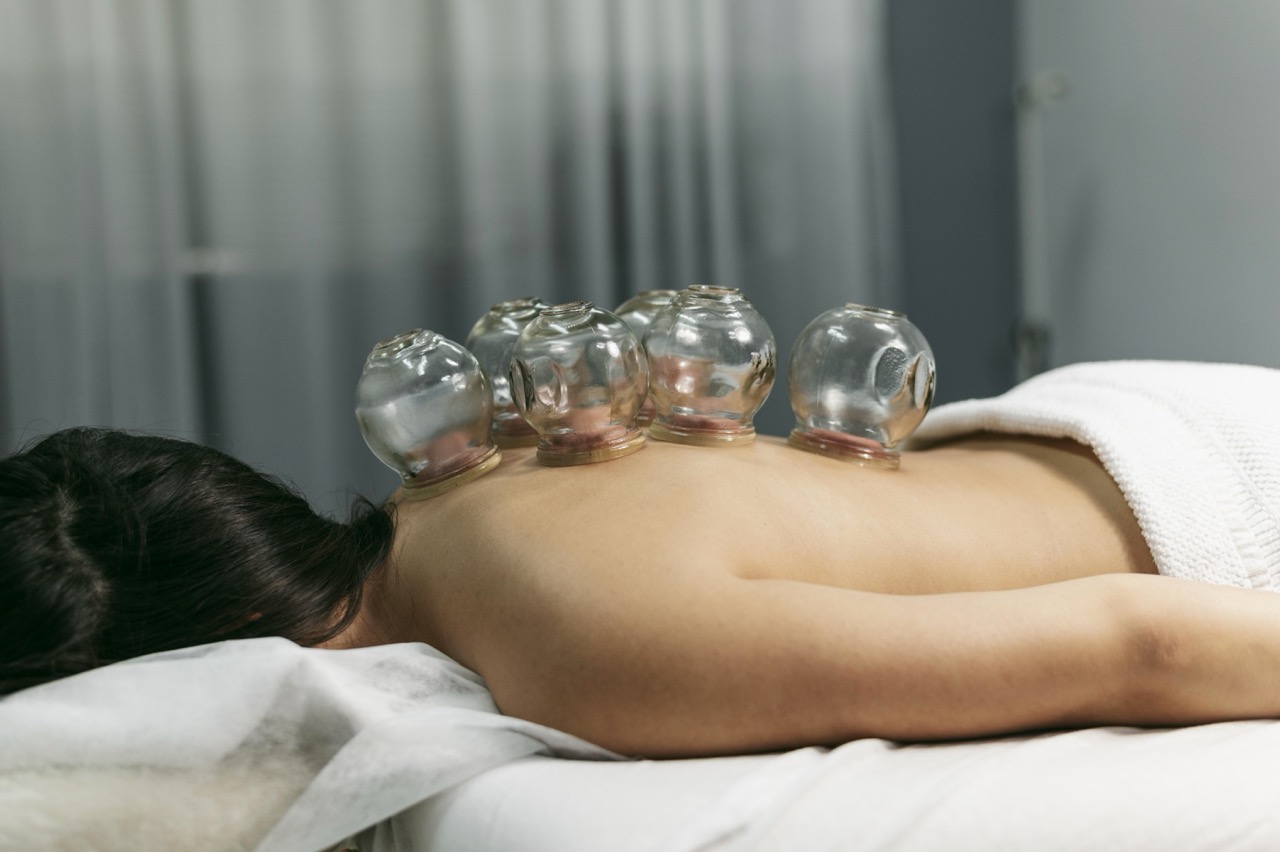
Cupping therapy, easily recognized by the circular marks it leaves on the skin, is an auxiliary technique used in traditional Chinese medicine (TCM) for a variety of therapeutic purposes. The practice involves placing specialized cups on the skin to create suction, which is maintained for a short period of time. While cupping is most commonly used today to address musculoskeletal pain, it has a broader range of applications within the traditional framework.
Cupping for Early-Stage Illness in TCM
In classical TCM, practitioners use cupping to “release the exterior.” This concept refers to treating early-stage illnesses such as colds and the flu. In TCM, external pathogens cause these conditions. Practitioners usually place cups on the upper back, neck, and shoulders to help vent those pathogens from the body. This approach reflects the traditional view that these invasions are yang in nature and tend to affect the upper body.
Cupping for Muscular Tension and Pain
TCM also uses cupping to relieve muscular tension and discomfort. In this system, pain often comes from stagnation in the flow of qi (energy) and blood. The suction from the cups aims to pull that stagnation outward and improve circulation. After treatment, the skin often shows discoloration. In TCM, practitioners interpret darker marks as a sign of more severe stagnation. With repeated treatments in the same area, those marks often appear lighter over time.
Static and Sliding Cupping Techniques
Cups come in different sizes and practitioners use them on many muscle groups. In static cupping, they place the cups on a specific area and leave them there for several minutes. In sliding cupping, they first apply oil to the skin, then place the cup and gently move it across the body, often along a muscle group. This method can cause mild discomfort, but many people compare it to a deep tissue massage. It often creates noticeable relaxation in a short amount of time.

Leave a Reply