
Traditional Chinese Medicine (TCM) offers a unique way of understanding health and disease. Rather than isolating one part of the body from another, TCM views the body as an interconnected whole and seeks to understand where and how balance has been disrupted.
The closer we can bring the body back toward balance, the more likely it is to function optimally and heal effectively. It is important to note that there is no perfect state of balance—everyone experiences imbalances from time to time. Acupuncture and Traditional Chinese Medicine work to identify these imbalances and support the body’s natural ability to restore harmony.
One of the primary diagnostic frameworks used in TCM is called the Eight Parameters (also known as the Eight Principles). These consist of four pairs of opposites that help practitioners evaluate the nature, location, and progression of a condition:
- Interior vs. Exterior
- Deficiency vs. Excess
- Cold vs. Heat
- Yin vs. Yang
Interior vs. Exterior
This comparison helps determine where a condition is located within the body and whether it is remaining on the surface or moving deeper.
Exterior conditions are generally more superficial and often occur in the early stages of illness. Examples include the beginning of a cold or flu, chills, body aches, headaches, or stiffness in the neck and shoulders.
Interior conditions involve deeper structures such as the organs, blood, and bones. They often indicate a more chronic condition or one that has progressed beyond the initial stage.
Differentiating between Interior and Exterior patterns helps us understand the progression of disease and determine the most appropriate treatment approach.
Deficiency vs. Excess
A Deficiency pattern may develop due to a weak constitution, prolonged illness, overwork, aging, or depletion of the body’s vital energy, known as Qi. Common signs of Deficiency may include:
- Low energy
- Pale complexion
- Feeling cold
- Dizziness
- Weak digestion
An Excess pattern, on the other hand, reflects the presence of a pathogenic factor or blockage within the body. Excess patterns often present with symptoms such as:
- Constipation
- Irritability
- PMS symptoms
- Distention or bloating
- Fixed or persistent pain
Many people exhibit both Deficiency and Excess patterns simultaneously. However, one pattern is usually more dominant and helps guide treatment.
Cold vs. Heat
Cold and Heat describe the nature of a condition and are essential in determining how it should be treated.
Cold patterns are often characterized by:
- Feeling cold or chilled
- Cold hands and feet
- A preference for warmth
- Low energy
- A desire for warm beverages
Heat patterns indicate an excess of heat within the body and may include symptoms such as:
- Fever
- Red face or eyes
- Constipation
- Hot flashes
- Irritability
- Elevated blood pressure
Identifying whether a condition is predominantly Cold or Heat allows practitioners to choose treatments that restore balance rather than further aggravate the imbalance.
Yin and Yang
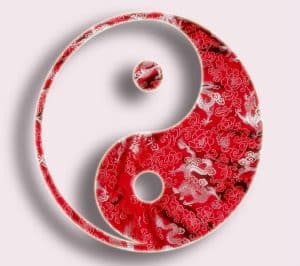
Yin and Yang provide the overarching framework through which all health conditions are understood in Traditional Chinese Medicine. The other six parameters—Interior/Exterior, Deficiency/Excess, and Cold/Heat—can all be viewed through the lens of Yin and Yang.
Yin represents the body’s cooling, nourishing, restorative, and substantive aspects. It is associated with:
- Body fluids, blood, and essence
- Rest, stillness, and sleep
- Cooling and moistening functions
- Structure and nourishment
Yang reflects the body’s active, warming, and dynamic qualities, including:
- Metabolism and energy production
- Movement and circulation
- Heat and transformation
- Function and activity
Health is not about maintaining a perfect 50/50 balance between Yin and Yang. Rather, it is about the body’s ability to continuously adapt and adjust according to its needs. Just as day naturally transforms into night and activity gives way to rest, Yin and Yang are constantly shifting in response to our environment, lifestyle, and stage of life.
Bringing It All Together
The Eight Parameters provide acupuncturists with a roadmap for understanding what is happening beneath the surface of symptoms. Two people may experience the same complaint—such as headaches, fatigue, or digestive issues—yet have very different underlying patterns of imbalance. By identifying whether a condition is Interior or Exterior, Deficient or Excess, Cold or Heat, and understanding its Yin-Yang nature, treatment can be tailored to address the root cause rather than simply manage symptoms.
This individualized approach is one of the reasons Traditional Chinese Medicine has remained relevant for thousands of years. By recognizing patterns and restoring balance, acupuncture supports the body’s innate ability to heal, adapt, and thrive.

Leave a Reply